

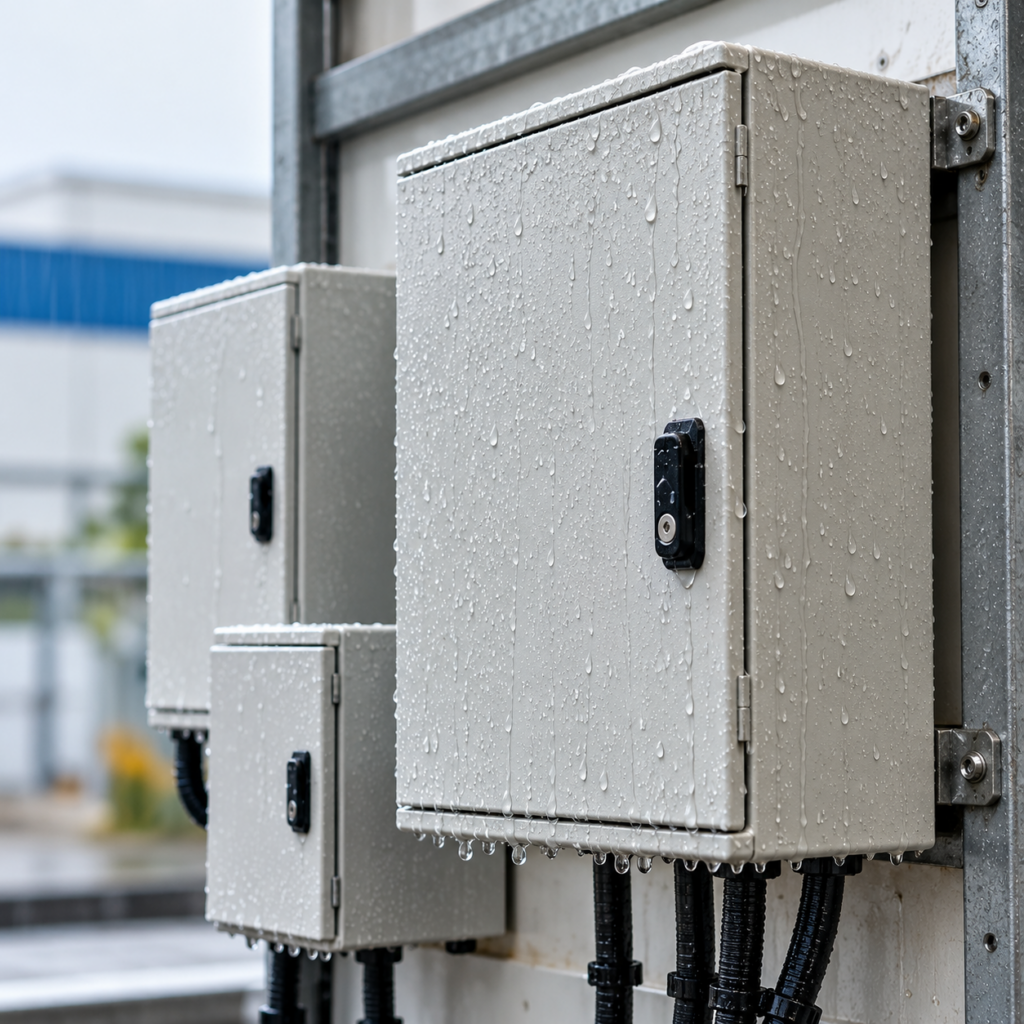
IP65 vs IP66 Enclosures: What’s the Difference?
Choosing the right electrical enclosure protection rating is essential for protecting electrical components in industrial environments. IP65 and IP66 enclosures both provide complete protection against dust, but they differ in their resistance to water exposure. Understanding this difference helps you select an enclosure suited to your installation conditions.
What Does an IP Rating Mean?
An Ingress Protection (IP) rating classifies how effectively an enclosure protects against the entry of solid objects, dust and water. The rating uses two digits.
- First digit — 6: Indicates dust-tight protection.
- Second digit — 5 or 6: Indicates the level of protection against water.
Both IP65 and IP66 have a first digit of 6, meaning they provide dust-tight protection under the applicable test conditions. Their difference lies in the water protection requirements.
What Is an IP65 Enclosure?
An IP65-rated electrical enclosure is dust-tight and protected against water jets from a nozzle under specified test conditions.
IP65 enclosures may be suitable for applications such as:
- Industrial electrical control panels
- Distribution boxes in suitable outdoor locations
- Automation and machine-control equipment
- Electrical installations exposed to dust and occasional water cleaning
The actual suitability depends on the installation environment, enclosure construction, cable entries, door seals and other design details.
What Is an IP66 Enclosure?
An IP66-rated electrical enclosure is dust-tight and protected against powerful water jets under specified test conditions.
It may be appropriate for installations where water exposure is more demanding, including certain industrial areas that require frequent washdown or experience strong water jets.
However, an IP66 rating does not automatically mean an enclosure is suitable for immersion, high-temperature pressure washing or every outdoor condition. These applications require separate consideration of the relevant conditions and specifications.
IP65 vs IP66: Key Differences
| Feature | IP65 Enclosure | IP66 Enclosure |
|---|---|---|
| Dust protection | Dust-tight | Dust-tight |
| Water protection | Protection against water jets | Protection against powerful water jets |
| Water exposure | Suitable for specified jet conditions | Suitable for more demanding specified jet conditions |
| Immersion protection | Not established by IP65 | Not established by IP66 |
| Typical selection consideration | General industrial water-jet exposure | More demanding water-jet exposure |
The correct rating should be selected according to the actual conditions the enclosure will face, rather than choosing the higher number automatically.
How to Choose Between IP65 and IP66
Before selecting an electrical enclosure, consider the following factors.
1. Installation Environment
Determine whether the enclosure will be installed indoors, outdoors, in a dusty workshop or in an area exposed to regular cleaning. Identify the expected water exposure before selecting the rating.
2. Cleaning Requirements
If the enclosure will be cleaned using water jets, confirm the cleaning method and the applicable protection requirements. Do not assume that every cleaning process is covered by an IP66 rating.
3. Enclosure Material
Consider the operating environment when choosing between materials such as mild steel and stainless steel. Corrosion exposure, chemical contact, finish quality and maintenance requirements can influence material selection independently of the IP rating.
4. Door Seals and Cable Entries
An enclosure’s protection depends on its complete construction. Door gaskets, hinges, locks, gland plates, cable glands and mounting arrangements must be suitable for the intended protection level.
5. Verified Test Performance
Check the manufacturer’s documentation to confirm the tested rating and the configuration covered by the test. Changes to cable entries, openings, gaskets or other construction details can affect the achieved protection.
Does IP66 Mean Better Protection in Every Situation?
No. IP66 provides a higher level of protection against water jets than IP65 under the relevant test conditions, but that does not make it the right choice for every application.
If IP65 meets the actual environmental requirements, specifying IP66 may add cost without providing a necessary benefit. Conversely, an enclosure exposed to more demanding water jets may require IP66 or another appropriate protection solution.
Also consider corrosion resistance, temperature, condensation, UV exposure and mechanical impact where relevant. An IP rating does not cover all these factors.
Frequently Asked Questions
Is IP66 better than IP65?
IP66 provides greater protection against water jets under specified test conditions. Whether it is better for your application depends on the actual exposure and requirements.
Are IP65 enclosures waterproof?
IP65 enclosures are protected against specified water-jet exposure, but the term “waterproof” can be misleading. IP65 does not establish suitability for immersion.
Can IP66 enclosures be installed outdoors?
They can be suitable for outdoor installations when the enclosure and its complete configuration meet the environmental requirements. Consider UV exposure, corrosion, temperature and installation details as well.
Does IP66 protect against dust?
Yes. Both IP65 and IP66 have a first digit of 6, indicating dust-tight protection under the applicable test conditions.
How do I select the right enclosure rating?
Assess the expected dust and water exposure, installation location, cleaning requirements and enclosure configuration. Confirm the rating using relevant manufacturer documentation and testing.
Need an Electrical Enclosure for Your Application?
Steel Box India manufactures steel electrical enclosures for industrial, electrical and automation applications. Enclosures can be developed according to customer drawings, specifications and production requirements.
Explore our electrical enclosure products and manufacturing capabilities, or contact our team to discuss your application and enclosure requirements.